Introduction
Peptic ulcers are a common health problem worldwide. Many people do not know that a tiny germ called Helicobacter pylori (H. pylori) often causes these ulcers. In this blog, you will learn what a peptic ulcer is, how H. pylori plays a role, and what you can do about it. Early understanding can help you manage symptoms and seek the right treatment.
What is a Peptic Ulcer?
A peptic ulcer is a sore that forms in the lining of your stomach or the upper part of your small intestine. Usually, the stomach has a thick layer of mucus to protect it from strong acids. However, when this layer breaks down, an ulcer can form. Peptic ulcers can cause pain and other problems if not treated. According to the World Health Organization (WHO), millions of people are affected by peptic ulcers each year.
How H. pylori Causes Peptic Ulcers
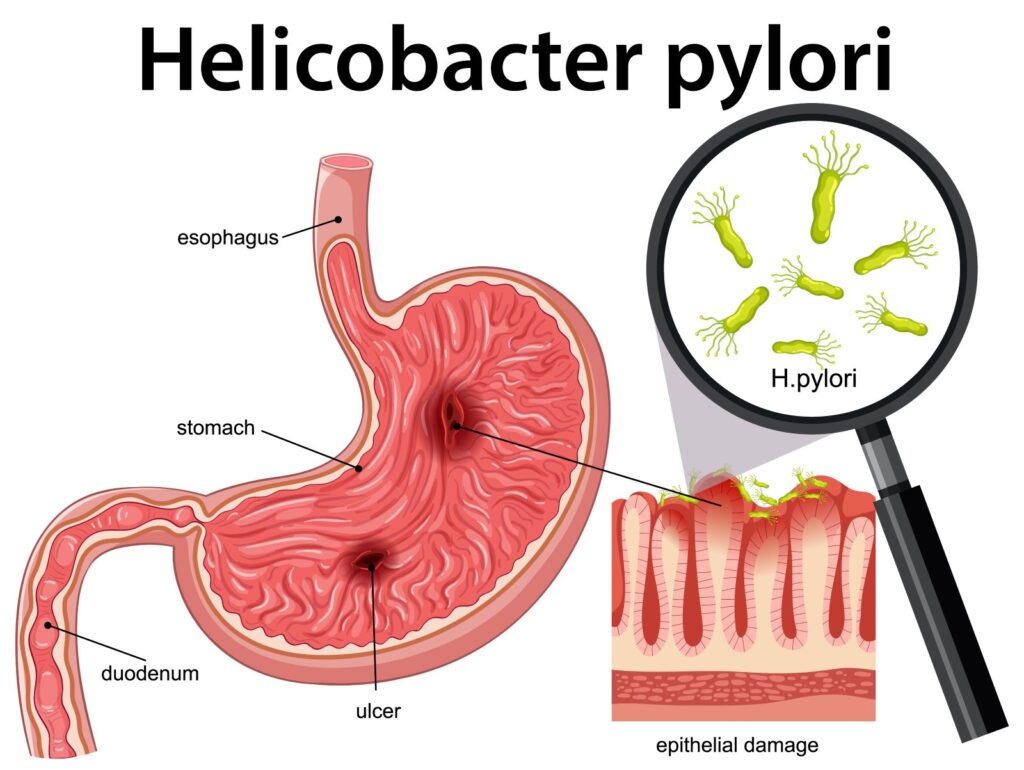
H. pylori is a type of bacteria that lives in the stomach. For many people, it does not cause any problems. However, in some cases, it damages the protective lining of the stomach or small intestine. As a result, acid can reach the sensitive tissue and create a sore, or ulcer. In fact, H. pylori infection is one of the main causes of peptic ulcers. Sometimes, other factors like regular use of painkillers (NSAIDs) or smoking can also increase the risk.
Symptoms of Peptic Ulcers
Peptic ulcer symptoms can vary from person to person. However, some signs are more common than others. If you notice any of these symptoms, you should talk to your doctor:
Sometimes, people have no symptoms at all. But if you have ongoing stomach pain, it is important to get checked.
Diagnosis of Peptic Ulcers and H. pylori Infection
Doctors use several methods to diagnose peptic ulcers and H. pylori infection. Early diagnosis can help prevent serious problems. Common tests include:
Because symptoms can be similar to other stomach problems, these tests help doctors find the real cause.
Treatment Options for Peptic Ulcers
Treatment for peptic ulcers depends on the cause. If H. pylori infection is found, doctors usually prescribe a mix of antibiotics and medicines to reduce stomach acid. This helps heal the ulcer and stop the infection. Common treatment steps include:
Most people feel better within a few weeks. However, it is important to finish all medicines as prescribed. If left untreated, peptic ulcers can lead to serious problems like bleeding or a hole in the stomach.
Prevention Tips for H. pylori and Peptic Ulcers
While not all ulcers can be prevented, you can lower your risk by following some simple steps. For example:
Because H. pylori spreads through food and water, good hygiene is very important. In addition, regular check-ups can help catch problems early.
Conclusion
Peptic ulcers are common but treatable. H. pylori infection is a leading cause, but with the right care, most people recover fully. If you have ongoing stomach pain or other symptoms, do not ignore them. Consult a gastroenterologist for personalized advice on peptic ulcer prevention and treatment.